Most risk in a residential underwrite is cyclical: rates move, vacancy moves, insurance renews higher. Those show up in a sensitivity table and they mean-revert. Water allocation is a different kind of variable, because it operates on entitlement rather than on price.
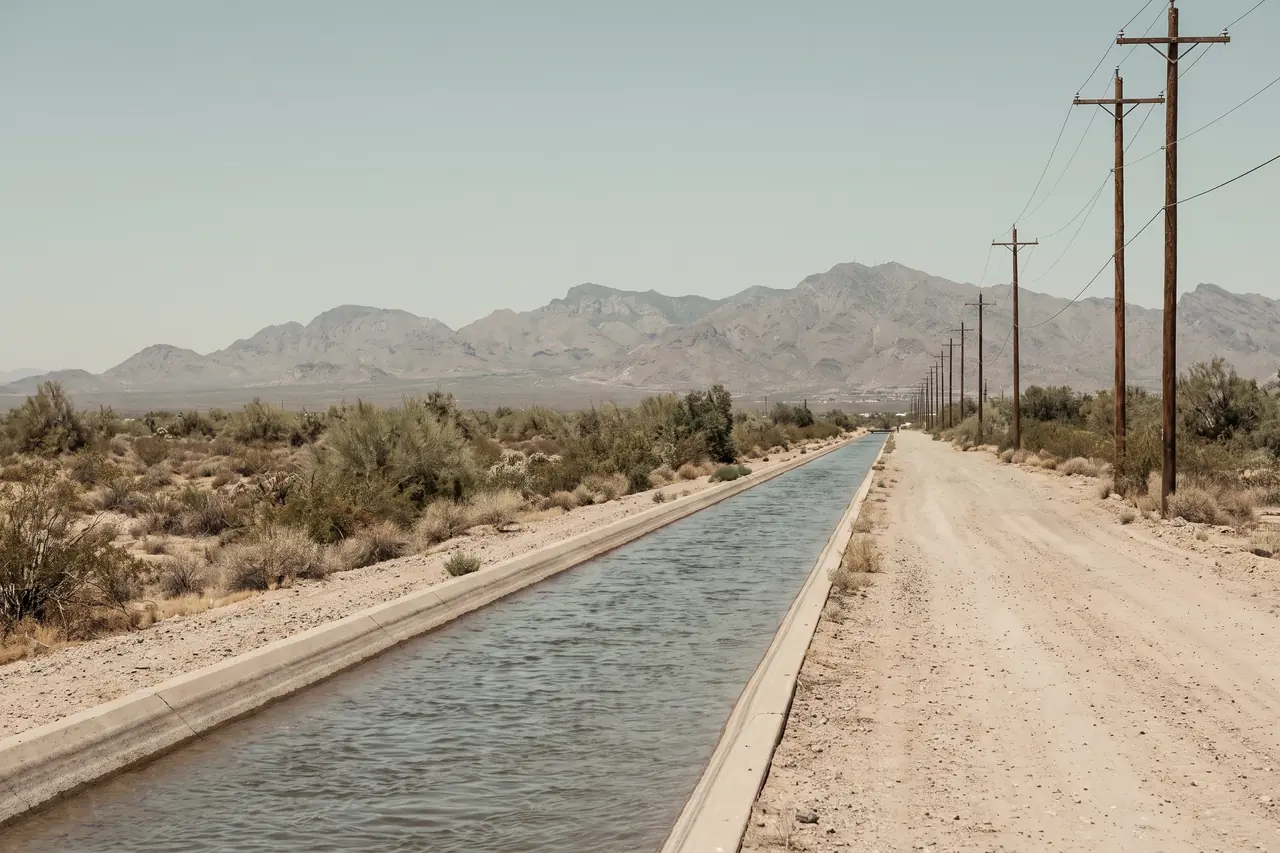
The Central Arizona Project moves Colorado River water 336 miles uphill from Lake Havasu to Phoenix and Tucson. Its allocations sit low in the priority order established by the river’s compacts, which means CAP supply is reduced before senior rights are touched.
What actually constrains development
Arizona’s Assured Water Supply rules require a developer inside an Active Management Area to demonstrate a hundred-year supply before a subdivision plat is approved. Where a groundwater model shows the demonstration cannot be made, new plats stop.
That does not affect an existing house with an existing meter. It affects the pipeline of competing supply around it — which is a price variable in both directions, and which is why this belongs in the discount rate and the exit assumption rather than in the operating statement.
How we treat it in a model
- Note the water provider on every asset. A municipal provider with a diversified portfolio and a private utility on the growth edge are not carrying the same long-run risk.
- Do not put it in year-one expenses. There is no line item; inventing one is false precision.
- Put it in the exit. A longer hold on the far-west edge deserves a more conservative terminal cap rate than the same asset in a built-out inner submarket.
- Say so explicitly. A risk that is priced silently is a risk nobody can argue with you about.
The counter-case, stated fairly
Constrained new supply is not automatically bad for an owner of existing stock. If plats stop and population does not, the existing inventory becomes more valuable, not less. The risk is not "water runs out"; it is that the direction and timing are genuinely uncertain and that the uncertainty is large relative to a fifteen-year hold.
That is precisely what a discount rate is for. It is the honest place to put a risk you cannot schedule.